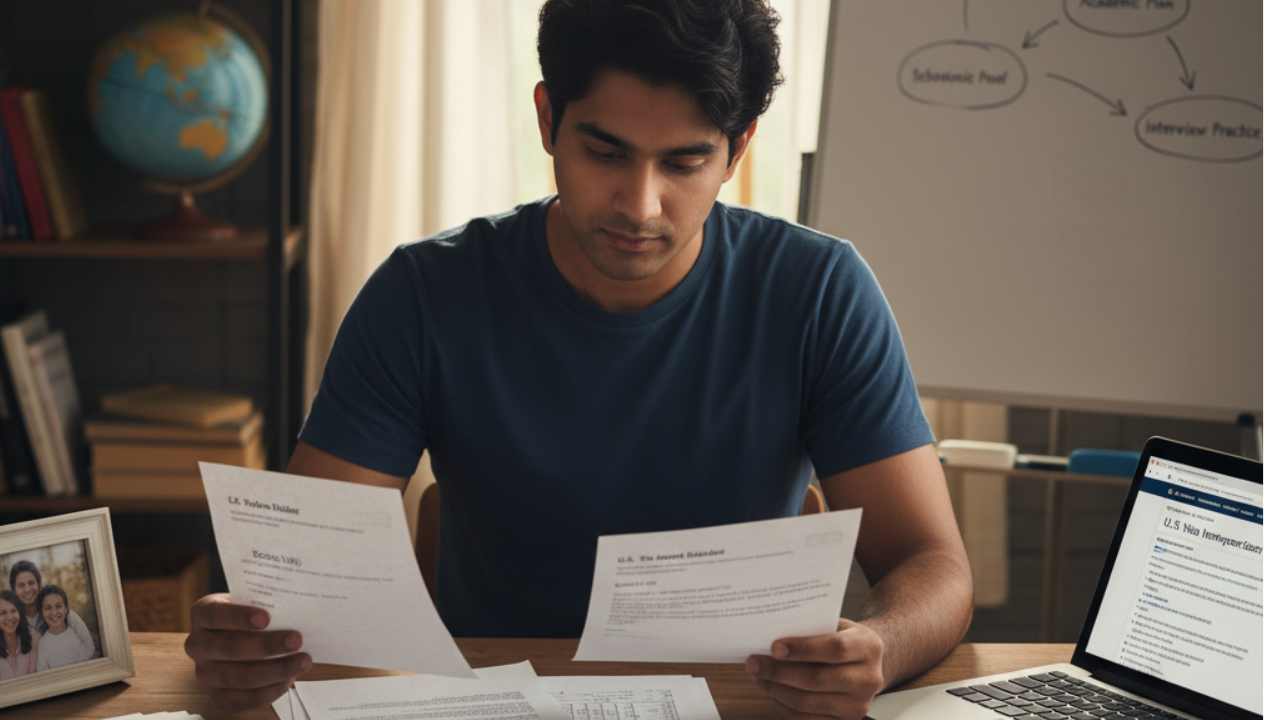
Facing an F1 visa rejection can be disheartening, but it’s not the end of the road. Many students have successfully re-applied and secured their visas by addressing the issues that led to their initial rejection. If you’ve recently been rejected, don’t lose hope!
This guide will help you understand what went wrong and how to improve your chances in your reapplication process.
Steps To Follow After Visa Rejection
1. Understand the Reason for Rejection
The first step after a visa denial is to identify the reason behind it. When your visa is rejected, the consular officer should provide a refusal letter or slip, which typically cites a specific section of the Immigration and Nationality Act. The most common reasons for F1 visa rejections include:
-
Section 214(b): Failure to prove non-immigrant intent.
-
Section 221(g): Administrative processing or missing documents.
-
Section 212(a): Inadmissibility due to past immigration violations.
Understanding why your visa was denied will help you avoid repeating the same mistakes and strengthen your reapplication.
2. Assess and Address the Issues
Once you understand why your F1 visa application was rejected, it’s time to take action. Here’s how to address common issues:
Financial Documentation
One of the most common reasons for F1 visa rejection is the lack of sufficient proof of financial support. U.S. immigration officials want to be sure that you can afford your studies without becoming a financial burden. To improve your financial documentation:
-
Provide updated bank statements, affidavits of support, and scholarship letters that clearly demonstrate you have the necessary funds to cover tuition and living expenses.
-
Ensure the documentation is current and accurately reflects your financial situation.
Non-Immigrant Intent
Another primary reason for visa denials is failure to demonstrate non-immigrant intent. U.S. immigration law requires applicants to prove they intend to return to their home country after completing their studies. To strengthen your case:
-
Demonstrate strong ties to your home country, such as family, property, or a job awaiting you.
-
Be prepared to explain why you plan to return after completing your studies, such as career opportunities or obligations back home.
Academic Intent
If the consular officer is unconvinced about the legitimacy of your academic intentions, your visa could be rejected. To make your academic intent more straightforward:
-
Clearly articulate why you chose your specific course of study and how it aligns with your career goals.
-
Demonstrate how studying in the U.S. will help you achieve your professional aspirations.
Interview Performance
Your performance during the visa interview can significantly influence the outcome. To improve your interview performance:
-
Practice common questions and responses to help you stay calm and articulate.
-
Be confident, honest, and concise when explaining your academic and career goals.
-
Answer questions directly and avoid giving overly detailed or unnecessary information.
By addressing these areas, you demonstrate to the consular officer that you understand the reason for your initial rejection and have taken steps to rectify the issues.
3. Prepare a Strong Reapplication
Once you have corrected the issues that led to your rejection, it’s time to reapply. Ensure that your reapplication is thorough and well-prepared:
-
Complete Documentation: Double-check that all forms, including the DS-160 and I-20, are accurately completed and up to date.
-
Consistent Information: Make sure that all details on your application, financial documents, and interview responses are consistent.
-
Explicit Intent: Be clear about your reasons for studying in the U.S. and how your studies will benefit your long-term career goals.
A complete and consistent application demonstrates your seriousness and increases your chances of approval.
4. Schedule and Attend the Interview
Once your application is submitted, you’ll need to schedule another visa interview. During the interview, be prepared to discuss:
-
Academic Background: Explain your previous education and how it relates to your current course of study.
-
Financial Stability: Prove that you can support yourself financially during your stay in the U.S.
-
Post-Graduation Plans: Clearly outline what you intend to do after graduation, emphasizing that you have strong ties to your home country.
-
Ties to Home Country: Reaffirm your intent to return home after completing your studies by showing evidence of family, career prospects, or property ownership.
Approach the interview with confidence. Practice your responses beforehand so you can clearly communicate your plans and intentions.
5. Learn from the Experience
If your initial F1 visa application was rejected, take time to reflect on the experience. Ask yourself:
-
Were there any missing or unclear documents?
-
Did I answer interview questions clearly and confidently?
-
Was all in the formation consistent across my application?
By learning from your previous experience, you can avoid repeating the same mistakes and present a stronger case in your next application.
Conclusion
Reapplying for an F1 visa after an initial rejection requires careful preparation. By understanding the reasons for F1 visa rejection, addressing the issues that led to the denial, and submitting a well-prepared application, you can increase your chances of approval. Don’t be discouraged by an initial setback—many students successfully reapply and secure their visas. With persistence and attention to detail, you can achieve your goal of studying in the U.S. and taking the next step toward your future.