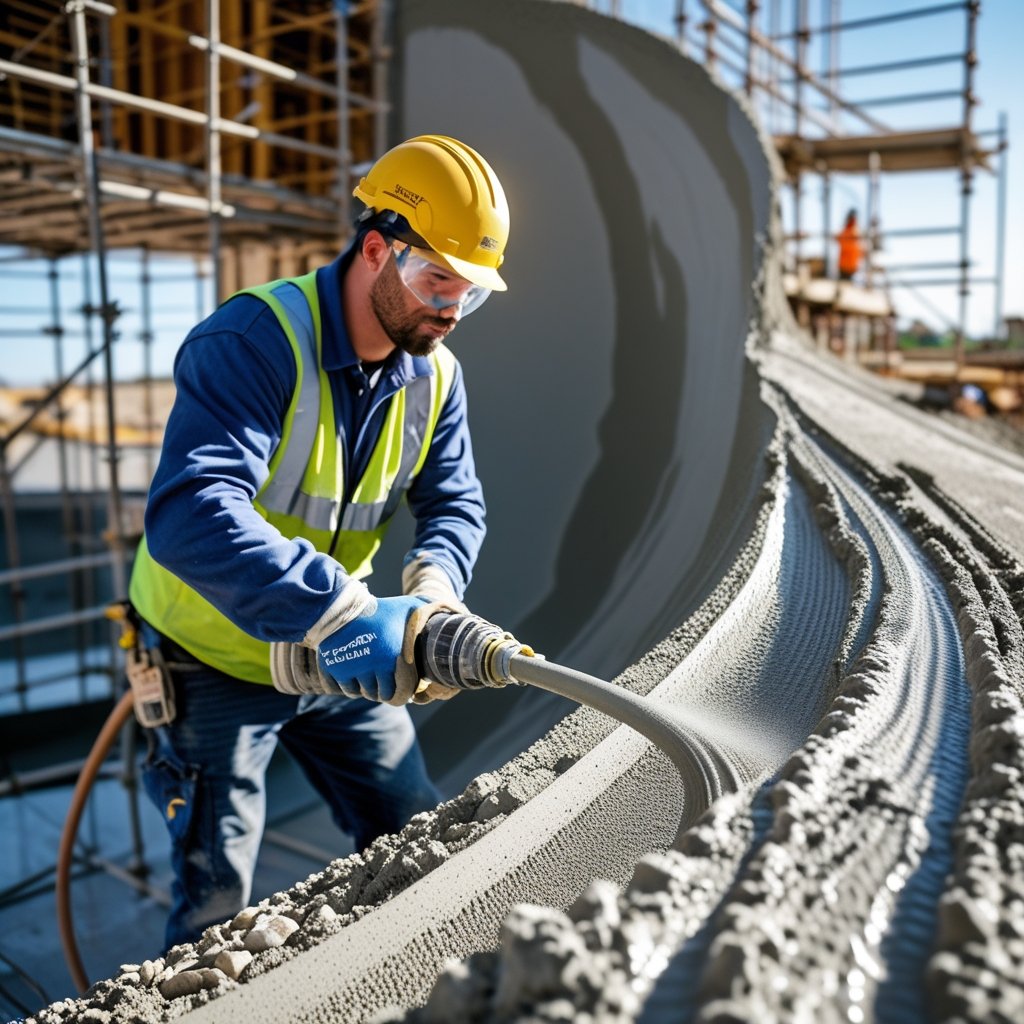
Sydney’s skyline is changing rapidly, with new tunnels, swimming pools, bridges, and high-rises shaping the city’s future. At the heart of many of these projects lies an advanced construction technique: shotcreting. Known for its speed, durability, and adaptability, shotcreting in Sydney is not just another building method—it has become a cornerstone of Sydney’s booming construction industry.
In this article, we’ll break down what shotcreting is, how it works, its different types, advantages, applications, costs, and why Sydney contractors prefer it over traditional concreting methods.
1. Understanding Shotcreting
🔹 What Exactly Is Shotcreting?
Shotcreting is a construction technique where concrete or mortar is sprayed onto a surface under high pressure. Unlike traditional concreting, which involves pouring and leveling, shotcrete adheres directly to surfaces, including vertical and overhead structures.
Originally developed in the early 1900s, shotcreting was first known as “gunite.” Today, it has evolved into a widely used method in civil, commercial, and residential projects across Sydney.
🔹 Types of Shotcreting
There are two main methods:
-
Dry-Mix Shotcrete (Gunite):
-
Cement and aggregates are mixed dry, and water is added at the nozzle during spraying.
-
Best suited for smaller applications or repair works.
-
More rebound (waste material) compared to wet-mix.
-
-
Wet-Mix Shotcrete:
-
A premixed blend of cement, aggregates, water, and additives is pumped through the hose and sprayed.
-
Offers stronger adhesion, less dust, and higher efficiency.
-
Ideal for large-scale projects in Sydney like tunnels and retaining walls.
-
-
2. How Does Shotcreting Work?
🔹 The Process Step by Step
-
Surface Preparation – Clean the surface of dust, oil, or debris. Sometimes a wire mesh or reinforcement is added for stability.
-
Mixing and Pumping – Depending on the method (wet or dry), the concrete mix is prepared.
-
High-Pressure Spraying – Using a powerful nozzle, the concrete is projected at high velocity onto the surface.
-
Compaction and Curing – The impact compacts the mix, forming a dense and durable layer, followed by proper curing.
🔹 Equipment Used in Shotcreting
-
Shotcrete machines and pumps – For high-pressure projection.
-
Nozzles and compressors – Control application and mix consistency.
-
Safety gear – Helmets, masks, and protective clothing to ensure worker safety.
-
2. How Does Shotcreting Work?
🔹 The Process Step by Step
-
Surface Preparation – Clean the surface of dust, oil, or debris. Sometimes a wire mesh or reinforcement is added for stability.
-
Mixing and Pumping – Depending on the method (wet or dry), the concrete mix is prepared.
-
High-Pressure Spraying – Using a powerful nozzle, the concrete is projected at high velocity onto the surface.
-
Compaction and Curing – The impact compacts the mix, forming a dense and durable layer, followed by proper curing.
🔹 Equipment Used in Shotcreting
-
Shotcrete machines and pumps – For high-pressure projection.
-
Nozzles and compressors – Control application and mix consistency.
-
Safety gear – Helmets, masks, and protective clothing to ensure worker safety.
3. Benefits of Shotcreting in Sydney’s Construction Industry
🔹 Strength and Durability
Shotcrete forms a dense, compact layer with high compressive strength, making it resistant to weather, erosion, and structural stress.
🔹 Speed and Efficiency
Compared to traditional formwork and pouring, shotcreting is significantly faster—perfect for Sydney’s large-scale infrastructure needs.
🔹 Versatility
From curved swimming pools to vertical cliff stabilizations, shotcreting can be applied in areas where pouring concrete is nearly impossible.
🔹 Reduced Labour Costs
The process requires fewer workers, cutting down labour expenses without compromising on quality.
4. Applications of Shotcreting in Sydney
🔹 Infrastructure Projects
Shotcreting is a go-to method for Sydney’s tunnel constructions, bridge reinforcements, and metro rail projects. Its ability to cover large, uneven surfaces makes it indispensable.
🔹 Swimming Pools
Most Sydney swimming pools are constructed using shotcrete due to its ability to form watertight, curved structures quickly and efficiently.
🔹 Retaining Walls and Slopes
In Sydney’s hilly suburbs and coastal cliffs, shotcrete is used to stabilize slopes and prevent erosion, ensuring long-term safety.
🔹 Residential and Commercial Construction
Basements, foundations, and high-rise walls benefit from the strength and efficiency of shotcrete, making it a preferred choice among Sydney builders.
5. Why Is Shotcreting So Popular in Sydney?
🔹 Sydney’s Construction Boom
With rapid urbanization, demand for housing and infrastructure is at an all-time high. Shotcreting offers the speed and reliability these projects require.
🔹 Suitability to Sydney’s Geography
Sydney’s mix of rocky terrains and coastal areas makes traditional concreting challenging. Shotcreting adapts perfectly to such conditions.
🔹 Compliance with Australian Standards
Shotcrete in Sydney complies with strict Australian building codes, ensuring structural safety and long-term reliability.
🔹 Long-Term Cost Savings
While initial costs may seem higher, shotcrete requires less maintenance, translating to savings over decades.
6. Cost of Shotcreting in Sydney
🔹 Factors That Influence Cost
-
Type of shotcreting (wet vs dry).
-
Size and complexity of the project.
-
Quality of materials used.
-
Labour expertise and machinery.
🔹 Average Pricing
In Sydney, shotcreting costs range between $100 to $150 per square metre, depending on project requirements. While slightly higher than traditional concreting, the efficiency, durability, and reduced labour costs often make it more economical in the long run.
7. Challenges and Considerations
🔹 Common Issues in Shotcreting
-
Rebound waste – Excess material falling off.
-
Dust generation – Especially in dry-mix applications.
-
Skilled labour dependency – Requires trained workers for quality results.
🔹 Safety Considerations
-
Proper use of PPE (helmets, goggles, masks).
-
Controlled spraying to avoid injuries.
-
Regular equipment maintenance.
8. Future of Shotcreting in Sydney
🔹 Technological Advancements
The future of shotcreting is bright with robotic spraying systems and eco-friendly concrete mixes being introduced.
🔹 Expected Growth in Sydney Construction
With projects like Sydney Metro expansions, major road tunnels, and residential developments, the demand for shotcreting is only set to rise.
Conclusion
Shotcreting has revolutionized Sydney’s construction industry with its strength, speed, versatility, and cost-effectiveness. From stabilizing slopes to building swimming pools and mega tunnels, this innovative method continues to shape Sydney’s infrastructure.
If you’re planning a construction project in Sydney, shotcreting might just be the smart, future-ready solution you need.
FAQs
1. What is the difference between shotcreting and concreting?
Shotcreting sprays concrete under pressure, while concreting involves pouring and leveling. Shotcrete is faster and works better on irregular surfaces.
2. How long does shotcrete last in Sydney’s climate?
With proper application, shotcrete can last 50 years or more, even in coastal environments.
3. Is shotcreting more expensive than traditional concrete?
While initial costs are slightly higher, reduced labour needs and long-term durability make it more cost-effective.
4. Why is shotcreting used for swimming pools in Sydney?
Shotcrete allows for curved, watertight designs, making it the preferred method for Sydney pool builders.
5. Can shotcreting be used for residential projects?
Yes, it’s widely used in basements, retaining walls, and foundations.
6. What safety precautions are required for shotcreting?
Workers must wear helmets, goggles, masks, and protective clothing to handle dust and high-pressure spraying safely.
7. Which method is better: dry-mix or wet-mix shotcrete?
Wet-mix is generally stronger and cleaner, making it the preferred choice for large Sydney projects, while dry-mix is good for repairs.
8. Does shotcreting require special maintenance?
Minimal maintenance is needed, apart from regular inspections and waterproofing when required.
9. Is shotcreting environmentally friendly?
Yes, especially with modern low-carbon concrete mixes, shotcreting reduces waste and enhances sustainability.
10. How do I find a reliable shotcreting contractor in Sydney?
Look for licensed contractors with experience, certifications, and positive client reviews to ensure quality work.