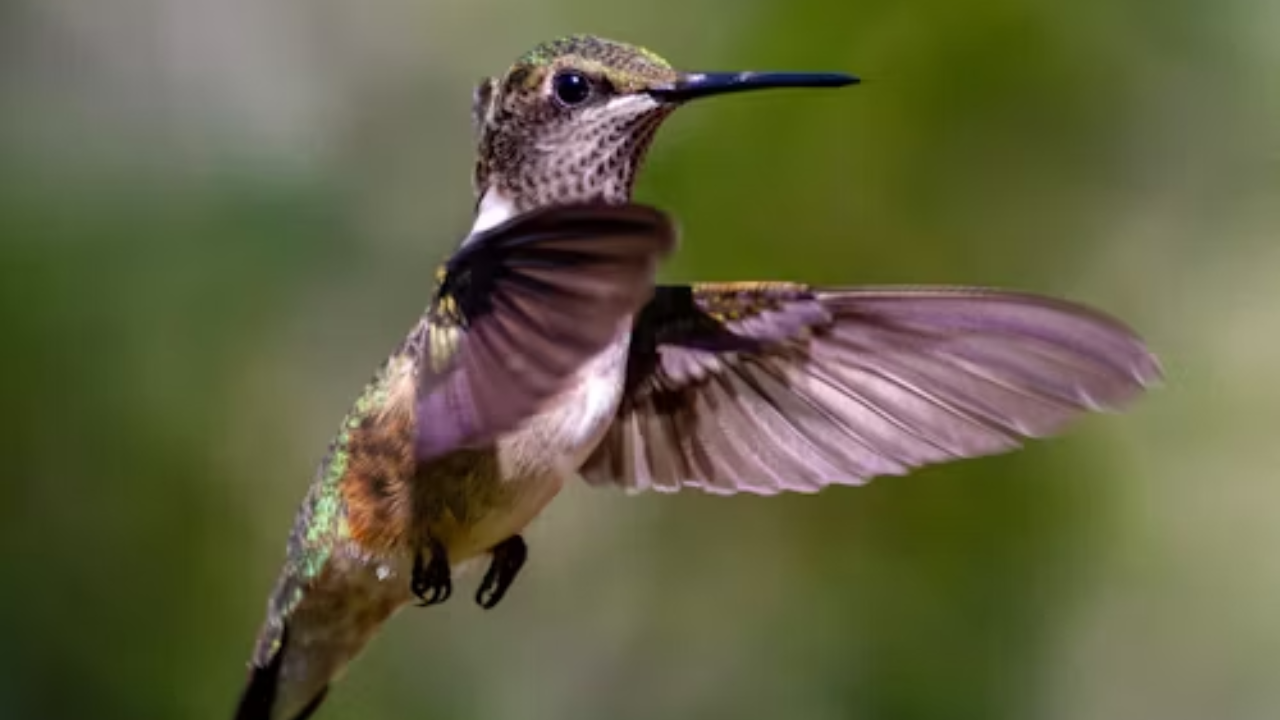
Hummingbirds are nature’s tiny, iridescent rockets. Their wings beat at incredible speeds—up to 80 times per second. Capturing a hummingbird in flight with perfect, frozen clarity is one of the toughest challenges in wildlife photography. It is a feat that often eludes even seasoned professionals using standard high-speed techniques.
The reward, however, is an image of suspended motion. You get a jewel of light and color, completely defying gravity. Achieving this specialized result requires moving beyond simple high-speed shutters. It demands embracing the complex power of multi-flash photography.
The Hummingbird Challenge: Why Shutters Fail
To truly freeze a hummingbird’s wings, you need an extremely brief burst of light. This light must be far shorter than any mechanical camera shutter can reliably produce.
Imagine setting your camera to $1/4000$ of a second. This is lightning fast for a stationary subject. However, it still is not fast enough to stop the full arc of a hummingbird’s wingtip. The resulting image will likely show blur at the tips.
There is another problem. Using such a high shutter speed often forces your camera’s ISO (light sensitivity) sky-high. High ISO settings result in grainy, poor-quality images. You lose the crisp detail required for a professional photo.
The level of technical know-how needed to overcome this hurdle is substantial. This is why many photographers opt to learn from experts. Joining specialized wildlife photo tours focused on avian subjects can provide the necessary instruction. These tours often include access to complex, pre-set equipment.
These wildlife photography trips are specifically designed to help you bypass years of frustrating trial-and-error. Finding a trusted provider is key.
What is Multi-Flash Photography? The Physics of the Freeze
The core secret to freezing a hummingbird is simple: shift the responsibility from the mechanical shutter to the flash duration.
Multi-flash photography involves setting up several specialized flashes, or strobes. You typically use three to five units. These are positioned around the subject and the background. The critical step is setting these flashes to a very low power output. The lower the power, the shorter the duration of the light pulse.
At low power settings, the flash duration can be incredibly fast. It is often faster than $1/10,000$ or even $1/20,000$ of a second. This brief burst of light is what truly stops the action.
When you trigger the camera, your shutter speed is set to the camera’s maximum flash sync speed. This is usually around $1/200$ or $1/250$ of a second. The entire environment is kept dark. The instantaneous pulse of the strobe, not the mechanical shutter, illuminates and freezes the action. The longer camera shutter simply ensures that the flash has enough time to fire and expose the scene before closing.
Equipment and Setup for the Perfect Stop
Mastering this technique requires careful setup and specific gear. The process is precise and requires patience.
1. Essential Gear
-
Multiple Strobes: You will need at least three high-speed flashes or speedlights. Four or five are ideal for professional results. These must be triggered wirelessly.
-
A Solid Tripod: Essential for stability, as any camera movement during the $1/200$ exposure will introduce blur.
-
The Backdrop: A simple painted canvas or printed backdrop controls the background color and texture.
-
The Subject Lure: The bird must be encouraged to pose in a fixed spot, usually at a feeder or a strategically placed natural flower.
2. Flash Positioning
This complex arrangement allows for complete creative control over light, shadow, and background.
-
The Main Light: One flash acts as the main light, positioned to the front-side of the bird. This provides the primary exposure.
-
The Rim Lights: Two flashes act as rim lights (or separation lights). These are placed behind and slightly to the side. They create a bright, distinct outline on the wings and body, making them visually “pop” against the background.
-
The Background Light: The final flash is directed specifically at the background. This controls the background’s color and exposure independently of the bird itself.
3. The Environment
The setup must be in a darkened or heavily shaded environment. This is non-negotiable. This ensures that the only light exposing the sensor is the instantaneous burst from the flashes. Any ambient light would cause motion blur during the longer $1/200$ second exposure.
The Rewards of Specialization
The effort involved in learning multi-flash techniques pays off handsomely. You move past merely documenting wildlife. You start sculpting it with light and freezing moments in time. The resulting photographs are sharp, saturated, and capture a beautiful moment impossible to see with the human eye.
The best wildlife photography tours do more than put you in front of the subject. They teach you advanced technical skills. While many tours focus on broad subjects like landscapes or large mammals, seeking out specialized workshops is the surest way to advance your skill set from intermediate to professional. Look specifically for wildlife photo tours or workshops dedicated to complex techniques, such as multi-flash hummingbirds. This is an investment in a specialized technique that will elevate all your future work.
These wildlife photography trips provide hands-on experience and expert feedback. This accelerates your learning curve in a way that books or videos cannot replicate. You are working with professional-grade equipment from day one.